
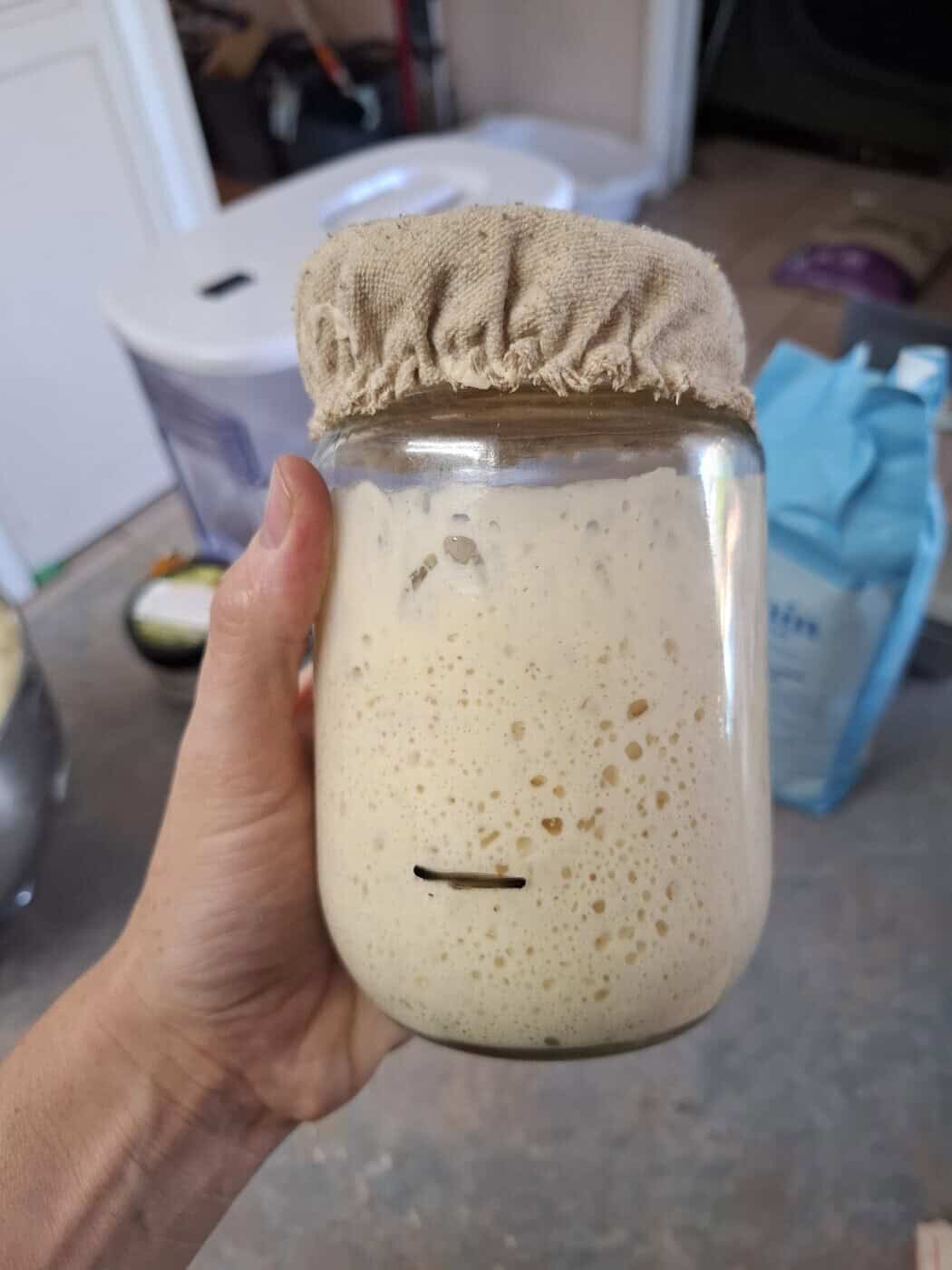
How I Keep My Sourdough Starter Alive in Kalgoorlie
The problem with a sourdough starter in a hot climate is not keeping it alive. It is catching it in time.
In a mild kitchen, you feed your starter, it peaks over several hours, and you have a comfortable window to use it. Out here in summer, that window slams shut. I would feed mine, it would rip through its food, peak, and collapse again before I had a chance to bake. I would come back a few hours later to a sunken, sour, hungry jar that had already been and gone.
If that is happening to you, you are not doing anything wrong. Your starter is just moving at Kalgoorlie speed. Heat speeds up everything in sourdough, not just your starter.
Here is what I actually do now, and it is simpler than what I used to do.
The fridge is your friend, not your enemy
Most starter advice treats the fridge as the place you put a starter to slow it down when you are not baking. That is true, but in a hot climate the fridge does something more useful. It gives you back the window that the heat took away.
Here is my method, and it is the one I use most days.
When I know I am going to bake, I feed my starter and let it peak on the bench. Once it has peaked, domed and bubbly and at the top of its rise, I put it straight in the fridge until I am ready to use it. That is usually the next day.
When I want to bake, I take it out and use it in my recipe straight from the fridge, cold. Then I feed it once more, keep 20 grams and add 120 grams of flour and 120 grams of water, let it peak again on the bench, and put it back in the fridge until the next bake.
That is the whole thing. Feed, peak, fridge. Use it cold. Feed, peak, fridge again.
Want more practical Goldfields notes like this?
Join Notes From the Kitchen Table, my monthly email from Kalgoorlie-Boulder. 👉Join here
Why this works when watching the clock does not
The reason this beats trying to time a bench starter in summer is that it takes the timing pressure off completely.
A peaked starter that goes into the fridge holds at its peak. The cold slows everything right down, so instead of a two hour window before it collapses, you have several days. You are no longer racing your own starter. You catch it at its best, park it, and use it when it suits you rather than when the heat dictates.
One honest caveat. This works for me because I bake most days, so my starter is never in the fridge for long. I cannot promise it behaves the same way if it sits in there for a week or two between bakes. If you are an occasional baker, the standard weekly fridge feed is still your best bet.
The discard jar I never used
Before I worked this out, I did what a lot of people do. I would end up with a jar of discard in the fridge, telling myself I would use it for pancakes or crackers, and then barely ever touching it. It just sat there feeling like a small daily guilt trip in the door of the fridge.
There is nothing wrong with keeping discard, and it does make good crackers. But if you are only keeping it because you feel bad throwing it out, let yourself off the hook. Discard is just unfed starter. It is not precious. Keep it if you will use it, bin it if you will not, and do not let it become one more thing you are failing at.
A few other things that help in the heat
The fridge method is the main event, but these help too.
Feed your starter later in the evening in summer, so it peaks overnight when the kitchen is coolest rather than collapsing in the afternoon heat.
Keep it out of direct sun and off the hottest bench. The spot next to a west-facing window is the worst place in the house for it.
And expect to feed more often than the books say. A starter in a 35 degree kitchen gets hungry fast. If it smells sharp like acetone, that is not a problem, it is just asking for food.
What to do next
Once your starter is sorted, the next thing is the bake itself, because a hot kitchen changes how you handle the dough too, not just the starter. Here is what actually works for beginners baking in the heat.
Read: Sourdough for beginners in a hot climate, what actually works
Keep going
If you want more practical Goldfields notes like this, you might like my monthly email, Notes From the Kitchen Table.
It’s a letter from my kitchen table in Kalgoorlie-Boulder, with regional life, home, and what I am making and learning along the way. Subscribe here: youbeautco.kit.com/signup. You can reply to any email and it comes straight back to me.
You can find me on Instagram at @youbeaut.co. I share glimpses of daily life, behind the scenes of making products, and small notes that do not always make it into the newsletter. Nothing polished, just real life in a dry, dusty town.
I also run a Facebook Group for women who want to talk about regional living, swap ideas, and share what is working in their homes. It is a friendly space to ask questions, share wins, and not feel like the only one living a long way from everything.
I hope You Beaut Co helps you feel more at home where you already are.
Related Posts on Baking Better Sourdough: