
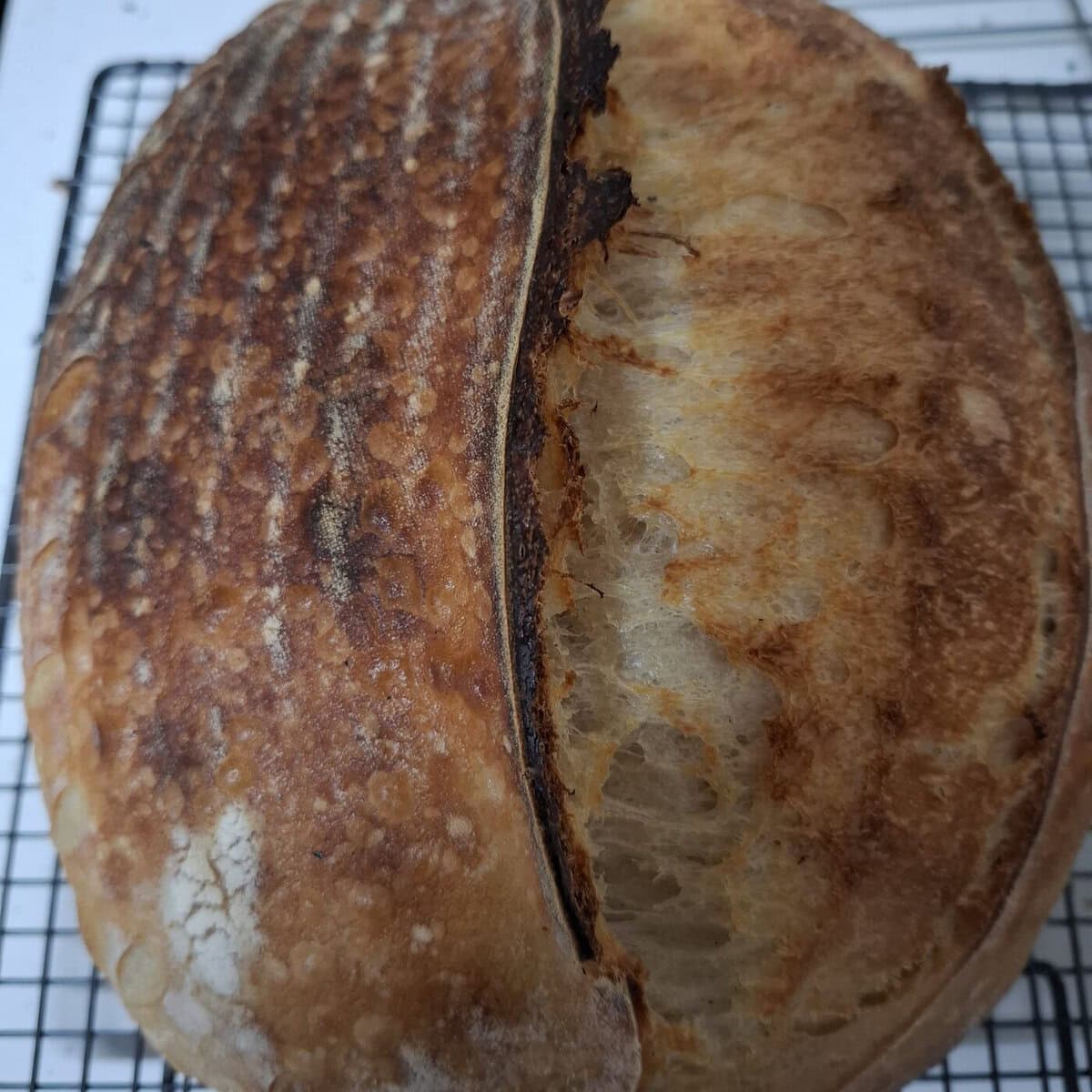
What Is Sourdough And Why Is Everyone Making It?
Three years ago my mother-in-law gave me a book on sourdough for Christmas.
I had wanted to learn for ages, but sourdough scared me. This was despite the fact that I was already baking two loaves of yeasted white bread most days and had been for a couple of years. I could make bread. Sourdough still felt like something other people did.
The book was the nudge. I made a starter from scratch, followed the instructions, and failed. Then I failed the next day. And the next. I failed every day for about three months.
I know now exactly why. My starter was made from scratch and it simply was not strong enough yet, and I did not understand that at the time. I thought it was me. But I kept going, because I am stubborn and because I had a very good reason to, which I will get to.
Here is what I wish someone had explained to me plainly at the start.
What sourdough actually is
Sourdough is bread made from flour, water and salt. That is the whole ingredient list.
No commercial yeast, no bread improver, no emulsifiers, no preservatives. Just three things, plus a starter, which is the part most people have not quite got their head around.

What a starter is
A starter is flour and water in a jar. That is genuinely all it is.
But fed regularly and left alone, it becomes a living culture of wild yeast and bacteria. The yeast is already in your flour and in the air of your kitchen. You are not adding it, you are just giving it somewhere to live.
When you feed a starter, meaning you add fresh flour and water, the yeast wakes up, eats the sugars in the flour, and gives off carbon dioxide. That gas is what makes your bread rise. The bacteria make acids at the same time, and those acids are what give sourdough its flavour and its name.
That is the whole trick. Ordinary bread rises because you added yeast from a packet. Sourdough rises because you grew your own.
Mine still does not have a name, poor thing. Three years and I have never got around to it.
Want more practical Goldfields notes like this?
Join Notes From the Kitchen Table, my monthly email from Kalgoorlie-Boulder. 👉Join here
What a healthy starter looks like
A good starter roughly doubles after you feed it. It domes on top and you can see the bubbles through the side of the jar. It smells pleasantly sour and yeasty, like beer or yoghurt.
If it smells sharp, like nail polish remover, it is hungry and needs feeding. If there is a layer of dark liquid on top, that is called hooch and it means the same thing. Stir it in and feed it. Neither is a crisis, which I did not know when I was panicking over mine in the first month.
The only time to actually worry is a pink or orange tinge. That one goes in the bin.
Why I kept going
Here is the very good reason.
My kids like the Tip Top bread from the supermarket, and they can get through three loaves in a day. When it was $4.70 a loaf and climbing, that was not a bread habit, that was a car payment. I did not learn sourdough because it was trendy. I learned it because I had to.
Flour, water and salt cost almost nothing. The starter costs nothing at all once you have it. For a family that goes through bread the way mine does, that is the difference that made all the failures worth pushing through.
The part nobody warned me about
After about a year, I felt like I had it. I could make a good loaf. I was pleased with myself.
Then we moved to Kalgoorlie.
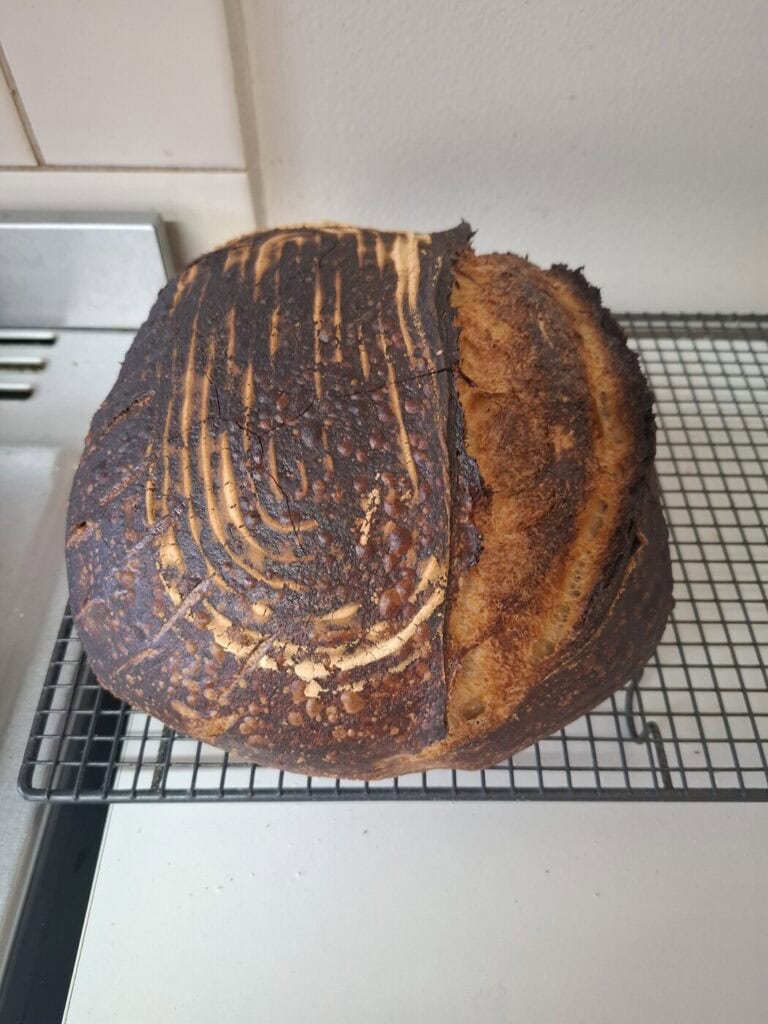
The first summer here undid everything I thought I knew. My loaves came out flat and slack, over and over, and I could not work out why. I was overproofing every single bake, though I did not have the word for it then. I was not using chilled water. I was not putting the dough in the fridge to bring its temperature down. I was doing everything that had worked perfectly well in a mild kitchen, in a kitchen that was nothing like mild.
It took me another year to learn to bake in this heat.
The thing that turned it around was not clever. It was a thermometer. I started actually measuring my dough instead of guessing, and using a temperature chart to guide me. Once I had done that reliably for a while, I started to understand what the dough was supposed to look like at each stage. And once I could read the dough, the whole thing got easier.
What I would tell you if you were starting today
Watch the dough, not the clock.
Every recipe gives you times. Those times are a guide, and they assume a kitchen that is probably nothing like yours. Your kitchen, your flour and your starter will all change how fast things move, and in this country that matters more than almost anywhere.
And expect to fail. Not because you are bad at it, but because failing is just part of learning this, and life gets in the way. A batch gets forgotten because a kid needed you. That is not a sign to quit. You just keep going, and keep going, and keep going a bit more, and one day you realise it has quietly become part of your week.
What to do next
If you live somewhere hot, and a lot of us in Australia do, the standard advice is going to let you down before you have even started, exactly like it let me down that first Kalgoorlie summer. Here is what heat actually does to your dough, and why it is not your fault.
Read: Five reasons sourdough is harder in Australian heat than anyone tells you
Keep going
If you want more practical Goldfields notes like this, you might like my monthly email, Notes From the Kitchen Table.
It’s a letter from my kitchen table in Kalgoorlie-Boulder, with regional life, home, and what I am making and learning along the way. Subscribe here: youbeautco.kit.com/signup. You can reply to any email and it comes straight back to me.
You can find me on Instagram at @youbeaut.co. I share glimpses of daily life, behind the scenes of making products, and small notes that do not always make it into the newsletter. Nothing polished, just real life in a dry, dusty town.
I also run a Facebook Group for women who want to talk about regional living, swap ideas, and share what is working in their homes. It is a friendly space to ask questions, share wins, and not feel like the only one living a long way from everything.
I hope You Beaut Co helps you feel more at home where you already are.